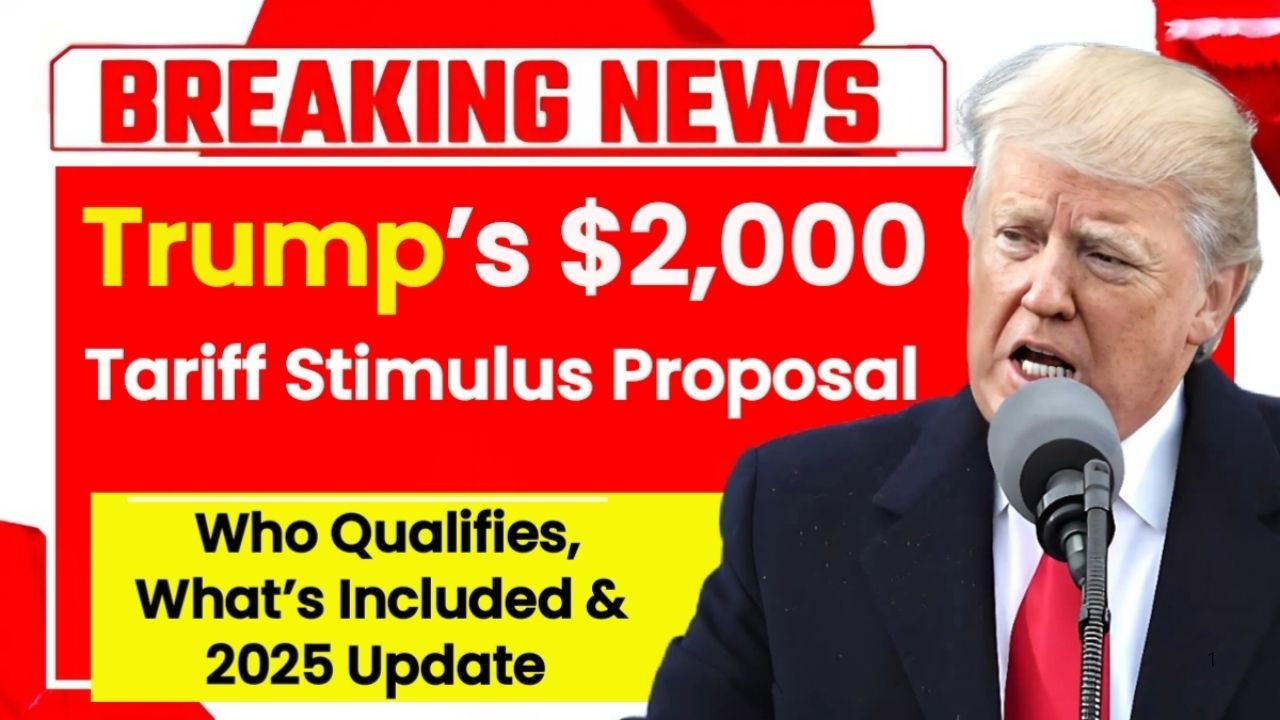
In 2025, one of the most talked-about economic ideas in the United States is Donald Trump’s proposal for a $2,000 tariff stimulus payment. With rising prices for food, utilities, and everyday essentials, many families are searching for financial relief. Trump’s plan suggests using money collected from tariffs on imported goods and sending it directly to American households. As living costs continue to climb, millions are eager to understand whether this proposal is realistic, who might receive the payment, and how the system would work if approved.
Trump describes the tariff stimulus as a way to give money back to American families without increasing federal debt. According to him, the payments would come from tariff revenue rather than new government borrowing. While the idea has attracted strong public support, many economists and lawmakers have raised questions about cost, legality, and long-term sustainability. Since no official bill has been introduced in Congress, the proposal is still in its early stages of discussion.
What the Tariff Stimulus Proposal Includes

Trump’s concept is built on the idea of using tariff revenue to provide a one-time payment to Americans. The U.S. collects billions of dollars every year from tariffs placed on imported goods. Instead of placing this revenue into the general budget, Trump suggests turning it into a “tariff dividend” for families facing economic pressure.
Key Goals of the Proposal
- Provide a $2,000 one-time payment
- Support middle- and working-class families
- Avoid increasing national debt
- Use tariff revenue collected from foreign imports
Although the general idea is clear, specific details such as income limits, dependent payments, and rollout plans have not been finalized.
Who May Qualify for the $2,000 Payment
Eligibility remains one of the biggest questions surrounding the proposal. Trump has indicated that high-income earners would likely be excluded so that payments target families experiencing financial stress.
Expected Eligibility (Based on Past Stimulus Models)
While nothing is confirmed, analysts predict the income limits may look similar to earlier stimulus rounds:
- Up to $75,000 income for individuals
- Up to $150,000 for married couples
- Possible additional payments for children, though unconfirmed
Including dependents would significantly increase the total cost, which may be difficult to fund with tariff revenue alone. For this reason, lawmakers are waiting for more detailed financial projections before supporting or rejecting the plan.
Challenges the Proposal Faces
While the idea has strong public appeal, economic and legal challenges could delay or prevent the proposal from becoming law.
Major Concerns
- Insufficient tariff revenue to fund payments for millions
- Inflation risks if billions of dollars enter the economy at once
- Higher import prices caused by tariffs themselves
- Legal limits that prevent a president from issuing direct payments without congressional approval

Congress must approve any federal payment program. The IRS cannot distribute stimulus money without a formal bill authorizing it. This means the proposal cannot move forward without legislative support.
What Still Remains Unclear in Late 2025
As of now, several key details are still unknown. These include the final income limit, whether dependents will qualify, how the IRS will process payments, and whether tariff revenue can consistently support a nationwide payout. Political support is also divided, and many lawmakers are waiting for cost estimates before taking a position. Until these questions are answered, the proposal remains an idea rather than an active government program.
FAQs
Is the $2,000 tariff stimulus approved?
No. As of late 2025, the proposal has not been approved by Congress.
Who would qualify if it becomes law?
Likely middle- and working-class families, but official guidelines have not been released.
Will dependents receive extra money?
Possibly, but this has not been confirmed.
Where will the money come from?
The proposal suggests using tariff revenue collected from imported goods.
When could payments start?
Payments would only begin if Congress passes a bill authorizing the program.
Conclusion
Trump’s $2,000 tariff stimulus proposal has gained widespread attention as Americans continue facing high living costs. The plan promises financial relief using tariff revenue instead of new federal debt, but major questions remain about eligibility, funding, inflation, and legal requirements. Until lawmakers introduce and approve a bill, the proposal remains a developing idea with no guaranteed outcome. Staying informed through official government updates will help Americans understand any future changes to the plan.