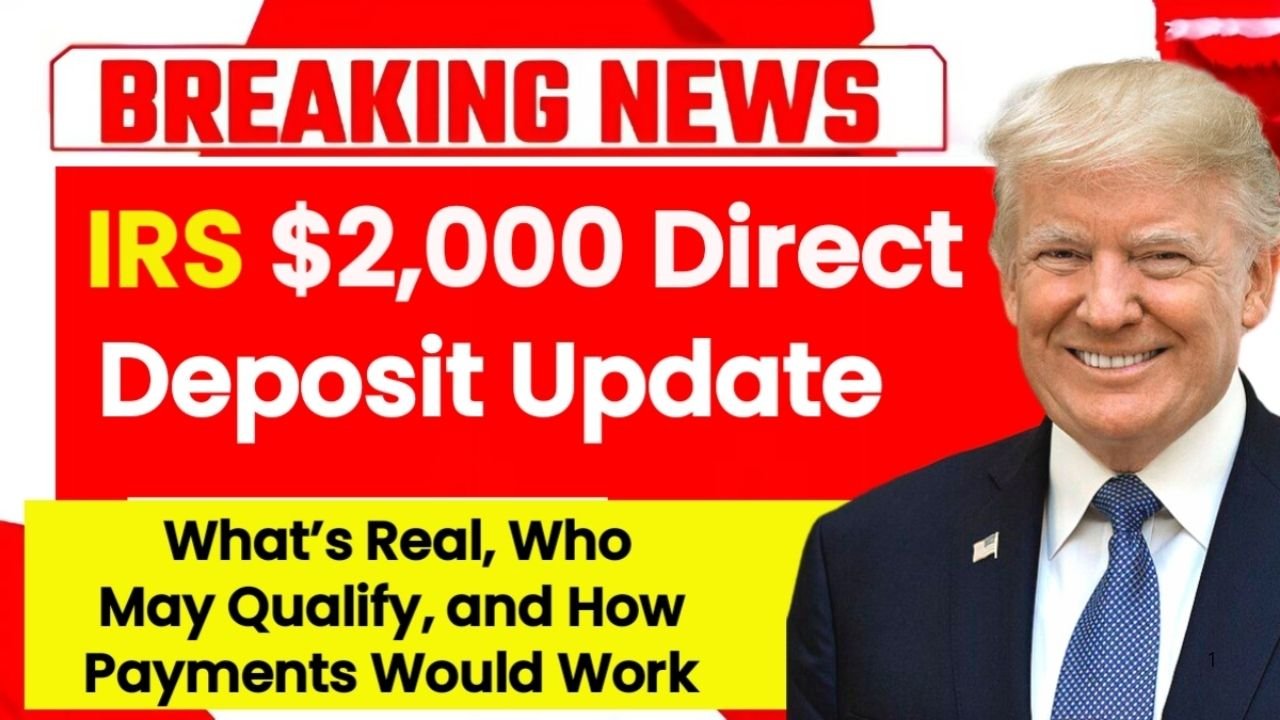
With the end of 2025 approaching, many Americans are searching online for updates about a rumored $2,000 IRS direct deposit expected in December. Social media posts, videos, and viral news graphics are claiming that payments are already approved. With rising prices and financial pressure on families, it is understandable why this rumor spread so quickly. But the reality is different from what many online posts suggest. As of now, the IRS has not approved any $2,000 payment for December 2025, and no official schedule exists. Understanding verified facts is important so people can avoid misinformation and stay financially prepared.
Current Status: Has the IRS Approved a $2,000 Payment?
There is no confirmed federal approval for a $2,000 direct deposit in December 2025.
No announcement has been issued by:
- IRS
- U.S. Treasury
- Congress
- White House

The proposal is still in discussion stage among lawmakers. Without congressional approval, the IRS legally cannot send any payments, update eligibility systems, or prepare a payment schedule. Any claims about payment dates, pre-approved eligibility, or deposit timelines are not supported by official sources.
Why the Rumor Became So Viral
The rumor spread rapidly because it reminded people of the pandemic-era stimulus checks. Many households still expect similar relief during high inflation and rising expenses. Early political discussions about returning federal revenues to taxpayers were misinterpreted as confirmed decisions. This misunderstanding caused confusion, especially among seniors and low-income families who previously received stimulus payments.
Where the Proposal Started
Lawmakers introduced the idea while discussing ways to provide financial relief by redirecting certain federal revenues back to citizens. Some referred to it as a “tariff rebate,” while others described it as a one-time support deposit. However, unlike emergency stimulus checks, this proposal requires:
- Detailed financial analysis
- Congressional approval
- Official budget allocation

Until these steps are complete, no federal agency can begin payment planning.
Possible Eligibility If the Payment Is Approved
If Congress approves the payment, eligibility may follow patterns similar to past federal relief programs. Possible qualifying groups may include:
- Individuals with low or moderate income
- Families with dependents
- Taxpayers who filed recent tax returns
- Social Security recipients (depending on final rules)
Eligibility would likely be based on the most recent processed tax return. However, no official income limits, dependent rules, or filing requirements exist yet.
How Payments Would Be Delivered

If the proposal becomes law, the IRS would likely use its existing systems. Expected delivery methods include:
- Direct deposit to bank accounts on file with the IRS
- Paper checks for those without banking details
- Prepaid debit cards for certain households
The IRS may also update online tools like “Get My Payment” to help people track their status — but only after Congress approves a law.
How Americans Can Prepare
Even though payments are not approved, taxpayers can stay ready by:
- Updating bank account details on IRS.gov
- Ensuring mailing addresses are correct
- Filing any pending tax returns
- Following only official government websites for updates
These steps can prevent delays if a payment is approved later.
Beware of Scams
Whenever federal payment rumors spread, scammers become active. Fake messages may claim early access, pre-registration, or guaranteed approval. The IRS will never:
- Ask for registration fees
- Request banking details by email or text
- Send unsolicited verification links
Avoid responding to suspicious messages and rely only on official government information.
Why Accurate Information Matters
In a time of economic uncertainty, false news can create confusion and financial risk. Many families rely on Social Security, disability benefits, and state assistance programs. Staying informed with accurate updates helps households plan better and avoid scams. Until Congress officially approves the proposal, the $2,000 direct deposit remains only a possibility, not a confirmed payment.
FAQs
Is the IRS sending a $2,000 payment in December 2025?
No. As of now, no payment has been approved.
Who would qualify if the payment becomes law?
Likely low and moderate-income taxpayers, but exact rules are not finalized.
Will Social Security recipients get the payment?
Possibly, but this depends entirely on Congress and the final eligibility rules.
When will the IRS announce updates?
Only after Congress approves a law authorizing the payment.
How can I avoid scams?
Ignore emails, texts, or calls requesting personal information about the $2,000 payment.
Conclusion
The $2,000 IRS direct deposit for December 2025 is still a proposal, not an approved program. Many online posts are misleading, and only federal agencies can confirm real updates. Until lawmakers pass a final bill, there is no official payment schedule or eligibility list. Staying informed through trusted government sources is the best way to protect yourself from misinformation and scams.